About Microsoft Certification Courses
Microsoft Certification Courses help learners build practical skills in cloud computing, productivity, security, data, AI, automation, and enterprise technologies.
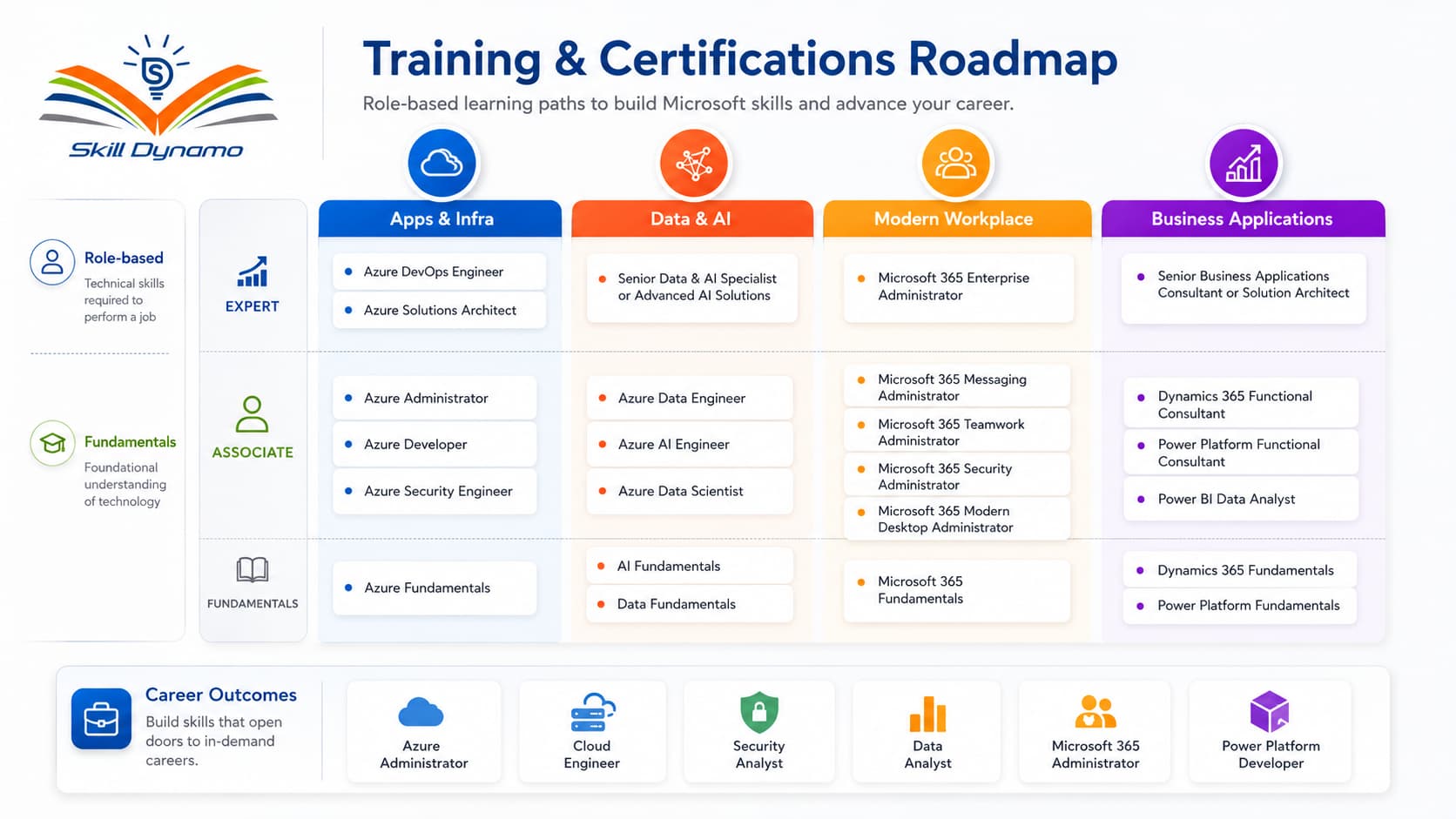
At Skill Dynamo, our Microsoft training programs cover Azure, Microsoft 365, Power Platform, Security, Data, AI, Windows, and Dynamics 365. Each course is designed with expert guidance, hands-on learning, and certification-focused preparation.
Why Learn Microsoft Technologies?
Microsoft technologies are widely used by businesses for cloud infrastructure, workplace productivity, cybersecurity, collaboration, automation, and data-driven decision-making. Learning these skills can help learners improve job readiness, professional confidence, and career growth.
Skill Dynamo Training Approach
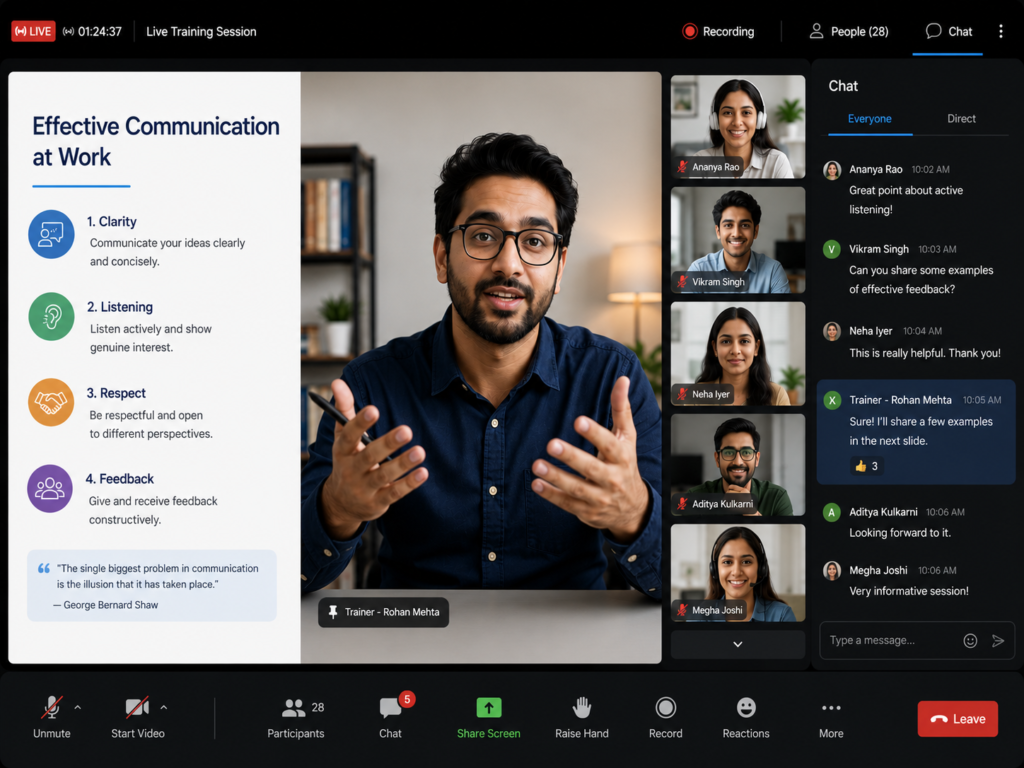
Skill Dynamo provides structured Microsoft training with expert-led sessions, practical examples, real-world exercises, and exam-focused guidance. Our approach helps learners understand concepts clearly and apply their skills in professional environments.
Who Can Join?
These courses are suitable for students, fresh graduates, working professionals, IT teams, developers, administrators, data learners, security professionals, and enterprise teams.
Start Your Learning Journey
Choose the right Microsoft course with Skill Dynamo and build future-ready skills for today’s cloud-first, AI-powered workplace.
Microsoft: From Personal Computing to AI-Powered Innovation
Microsoft was founded in 1975 by Bill Gates and Paul Allen with a vision to make computing accessible to more people. What started as a software company for early personal computers later became one of the most influential technology companies in the world.
Microsoft’s growth began with software development for personal computers and expanded through major products such as Windows, Microsoft Office, and enterprise software. The launch of Windows helped make computers easier to use with a graphical interface, while Microsoft Office became a trusted productivity solution for businesses, students, and professionals.
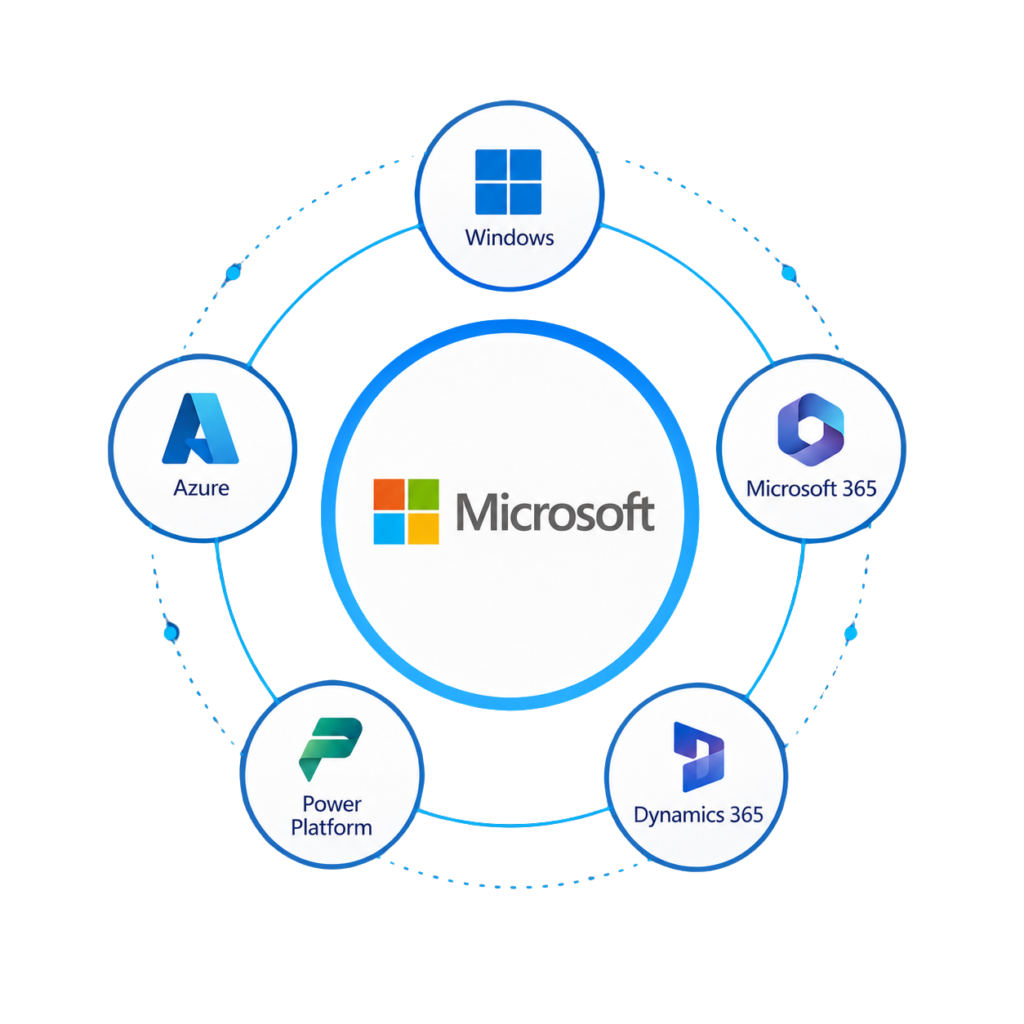
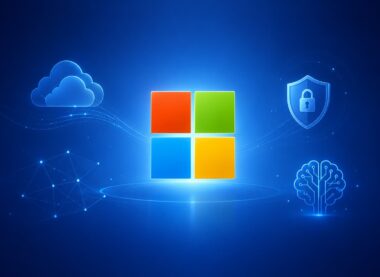
As technology evolved, Microsoft moved beyond desktop software into cloud computing, enterprise platforms, collaboration tools, cybersecurity, business applications, and artificial intelligence. Products like Microsoft 365, Azure, Power Platform, Dynamics 365, Microsoft Teams, and Microsoft Security now support organizations across the world.
Today, Microsoft plays a major role in cloud, AI, productivity, data, security, developer tools, and digital transformation. Its technologies are used by businesses, governments, educational institutions, and professionals to manage operations, improve collaboration, protect systems, automate workflows, and make smarter decisions.
For learners, Microsoft’s history shows continuous innovation and long-term relevance in the technology industry. By learning Microsoft technologies, students and professionals can build skills connected to real business needs and prepare for careers in cloud computing, IT administration, cybersecurity, data analytics, AI, automation, and enterprise solutions.
Skill Dynamo’s Microsoft courses are designed to help learners understand this technology ecosystem and gain practical skills that match today’s workplace requirements.
Microsoft Skills for the 2026 Digital Workplace
AI-Powered Productivity
Microsoft learning is becoming more important as organizations continue to adopt cloud platforms, AI-powered tools, cybersecurity solutions, automation systems, and modern workplace technologies. In 2026, businesses need professionals who can work confidently with Microsoft products and apply them to real business challenges.
One of the biggest trends is AI-powered productivity. Microsoft 365 Copilot is changing how teams work by helping users create content, summarize information, analyze data, manage communication, and improve daily workflows. This makes Microsoft 365 and Copilot skills valuable for both technical and non-technical professionals.
Azure Cloud Adoption
Cloud computing continues to be a major focus through Microsoft Azure. Organizations use Azure for hosting applications, managing infrastructure, storing data, building AI solutions, improving security, and supporting digital transformation. Learners with Azure knowledge can prepare for roles in cloud administration, cloud engineering, DevOps, solution architecture, and infrastructure management.
Cybersecurity and Identity Protection
Cybersecurity is another high-demand area. Microsoft Security, Microsoft Defender, Microsoft Entra, compliance tools, and identity solutions are becoming essential as companies focus on protecting users, devices, applications, and data. Security-focused Microsoft training can help learners move toward roles in security operations, identity management, compliance, and cloud security.
Automation with Power Platform
Automation and low-code development are also growing through Microsoft Power Platform. Power Apps, Power Automate, Power BI, and Copilot Studio help businesses build apps, automate workflows, analyze data, and create AI-powered solutions with less coding. These skills are useful for business users, analysts, developers, and automation professionals.
Data and AI-Driven Decisions
Data and AI skills are becoming highly valuable as organizations depend more on data-driven decision-making. Microsoft tools such as Power BI, Azure Data services, Azure AI, and Microsoft Fabric help professionals manage data, build reports, create insights, and develop intelligent solutions.
Microsoft certifications and Applied Skills are also becoming more practical and role-focused. Microsoft Learn highlights credentials that help learners prove real-world ability in areas like AI, cloud, security, and business roles. This makes certification-focused learning useful for career growth and workplace credibility.
Future-Ready Learning with Skill Dynamo
Skill Dynamo’s Microsoft courses are designed to help learners stay aligned with these trends through updated training content, expert-led sessions, hands-on practice, and certification-focused guidance. By learning Microsoft technologies now, students, professionals, and enterprise teams can build future-ready skills for the 2026 digital workplace.


 SkillDynamo