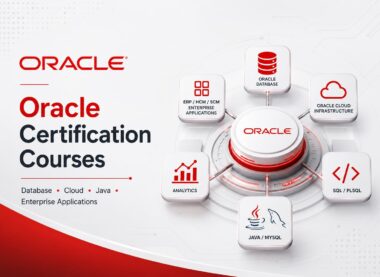
Oracle AI Database: Pl/SQL Fundamentals
Develop practical Oracle AI Database: Pl/SQL Fundamentals capability through four course-specific lessons with demonstrations, hands-on exercises, evidence-based validation, troubleshooting, and operational handover.
-
 -by SkillDynamo
- 0 Students
- Last updated
Course Description
Oracle AI Database: Pl/SQL Fundamentals develops practical capability in pl/sql blocks, variables, data types, control flow, and sql integration and cursors, records, collections, exceptions, and transaction control. The learning path connects Oracle architecture, configuration, development, or functional processing to ownership, security, data quality, controls, and measurable acceptance criteria.
The later modules address procedures, functions, packages, parameters, scope, and modular design and triggers, dynamic sql, security, testing, instrumentation, and performance. Learners work with compiled blocks, cursor results, exception logs, transaction outcomes to distinguish configuration defects from data, access, integration, performance, or operational failures.
By completing the course, participants can support a PL/SQL solution validating data, processing transactions, handling exceptions, packaging reusable logic, and exposing useful diagnostics. They also create an improvement plan covering validation, exception handling, rollback, ownership, monitoring, and production support.
What You Will Learn
- Interpret the architecture and decision points associated with PL/SQL Blocks, Variables.
- Prepare Data Types, Control Flow, SQL Integration for production use and confirm it through compiled blocks.
- Perform Cursors, Records with explicit inputs, outputs, and exception handling.
- Detect implicit conversions early by monitoring Collections, Exceptions, Transaction Control for abnormal behaviour.
- Integrate Procedures, Functions into the wider workflow rather than treating it as an isolated task.
- Reconcile Packages, Parameters, Scope with package specifications and assign ownership for unresolved differences.
- Optimise Triggers, Dynamic SQL around reliability, security, performance, and user outcomes.
- Create a support playbook for trigger side effects that uses Security, Testing, Instrumentation to guide diagnosis and rollback.
SkillDynamo Training Approach
Delivery combines Oracle-specific demonstrations, guided hands-on exercises, scenario analysis, validation checklists, structured troubleshooting, peer review, and a final improvement plan. Learners document assumptions, settings, data, outputs, exceptions, corrective actions, rollback needs, approvals, evidence, and operational responsibilities.
Curriculum
- 1 Section
- 4 Lessons
- 40 Hours
- Course Curriculum4 Items
- 1.1Oracle AI Database: Pl/SQL Fundamentals — Lesson 1: PL/SQL Blocks, Variables, Data Types, Control Flow, and SQL Integration10 hours
- 1.2Oracle AI Database: Pl/SQL Fundamentals — Lesson 2: Cursors, Records, Collections, Exceptions, and Transaction Control10 hours
- 1.3Oracle AI Database: Pl/SQL Fundamentals — Lesson 3: Procedures, Functions, Packages, Parameters, Scope, and Modular Design10 hours
- 1.4Oracle AI Database: Pl/SQL Fundamentals — Lesson 4: Triggers, Dynamic SQL, Security, Testing, Instrumentation, and Performance10 hours
SkillDynamo Expert Team
Instructor-led delivery tailored to Oracle AI Database: Pl/SQL Fundamentals, with Oracle-specific demonstrations, guided configuration activities, practical implementation scenarios, validation checkpoints, and troubleshooting guidance. The SkillDynamo Expert Team helps learners understand pl/sql blocks, variables, data types, control flow, and sql integration, cursors, records, collections, exceptions, and transaction control, procedures, functions, packages, parameters, scope, and modular design, triggers, dynamic sql, security, testing, instrumentation, and performance and apply the workflows confidently in real-world Oracle environments.
Student Reviews
No published reviews yet.
Log in with your student account to submit a review. Register using your email.