
 -by
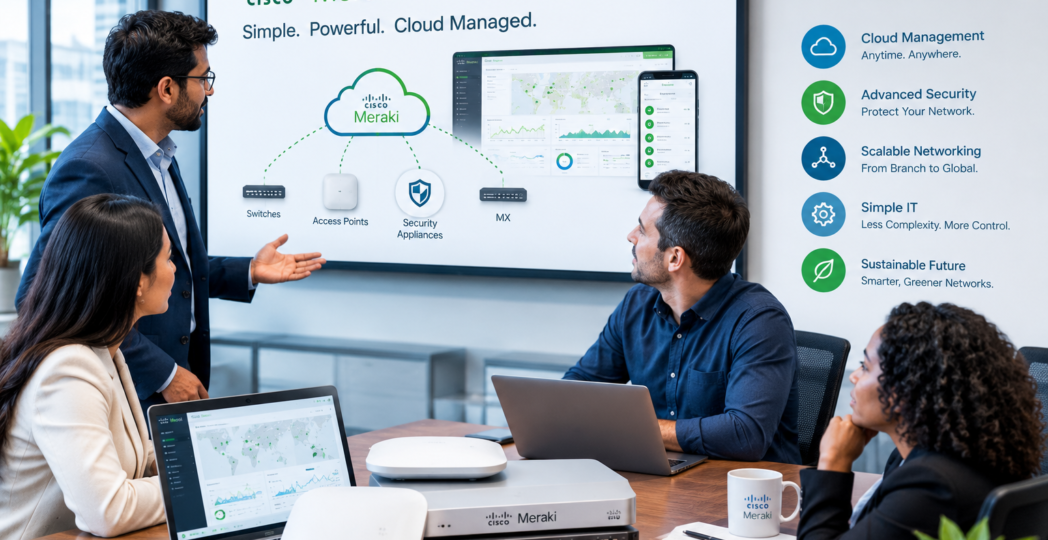
Cisco Meraki is a cloud-managed networking technology that helps organizations simplify IT operations, improve network visibility, strengthen security, and connect users, devices, and applications across multiple locations. By combining centralized cloud management with networking and security capabilities, Meraki enables businesses to manage complex IT environments through a unified dashboard. Its technology is increasingly relevant to enterprises, educational institutions, healthcare organizations, retail businesses, manufacturing companies, and distributed workplaces.
As organizations adopt hybrid work, cloud applications, Internet of Things (IoT) devices, and digital transformation initiatives, the demand for scalable and intelligent network management continues to grow. Cisco Meraki supports these developments by making network deployment, monitoring, troubleshooting, and administration more accessible to IT teams.
1. Latest Features of Cisco Meraki Technology
Cloud-Based Network Management
One of Meraki’s most important capabilities is centralized cloud management. Administrators can configure, monitor, and manage supported network devices from a common dashboard without having to access every device individually. This approach simplifies administration across branch offices, campuses, retail stores, and geographically distributed enterprises. Centralized configuration also helps IT teams maintain consistent network policies across multiple locations.
Wireless Networking and Wi-Fi Modernization
Meraki wireless access points support modern Wi-Fi technologies, with capabilities depending on the hardware model and software configuration. Wi-Fi 6 and Wi-Fi 6E, along with Wi-Fi 7 where supported by newer hardware, help organizations address growing demands for bandwidth, lower latency, and improved performance in high-density environments. Features such as application visibility, wireless health monitoring, and client analytics help administrators identify connectivity problems and improve user experiences.
Intelligent Switching and Network Visibility
Meraki switches provide centralized management of wired network infrastructure, including port configuration, VLAN management, traffic visibility, and network monitoring. These capabilities help organizations connect computers, servers, wireless access points, IP phones, cameras, and other devices. Administrators can identify connectivity issues, examine device status, and apply consistent configurations without relying entirely on manual command-line administration.
Integrated Security and SD-WAN
Meraki security appliances provide capabilities for network protection, traffic management, and secure connectivity between distributed locations. Depending on the product and licensing, organizations can use firewall policies, intrusion detection and prevention, content filtering, site-to-site VPNs, and secure SD-WAN functions. These features help IT teams manage connectivity between headquarters, branch offices, remote locations, and cloud environments.
SD-WAN capabilities can improve application performance by helping organizations manage traffic across available internet and private-network connections. This is especially useful for businesses that rely on cloud-based collaboration tools, enterprise applications, video conferencing, and distributed business systems.
Advanced Analytics and Troubleshooting
Network analytics help administrators understand client connectivity, application usage, device health, and performance patterns. Meraki’s monitoring capabilities can help IT teams investigate slow connections, identify problematic access points, and recognize recurring issues. Greater visibility supports faster troubleshooting and more informed capacity planning.
IoT, Cameras, and Physical Security
Meraki’s portfolio extends beyond traditional networking into areas such as smart cameras, sensors, and physical security. Depending on the products deployed, organizations can use cloud-managed video security, environmental monitoring, and connected-device insights. These capabilities support use cases such as monitoring facilities, improving building operations, and gaining visibility into activity across business locations.
Automation and API Integration
Meraki provides APIs and automation options that allow IT teams to integrate network management with external systems and operational workflows. Organizations can automate repetitive configuration tasks, collect network information, generate reports, and connect networking data with service management or monitoring platforms. This helps reduce manual effort and makes network operations more scalable.
2. Growth of Cisco Meraki Technology
The growth of Meraki technology is closely connected to the increasing need for centralized IT management. Organizations with many branches or remote locations often face challenges in maintaining consistent configurations, applying security policies, and resolving connectivity problems. Cloud-managed networking helps address these challenges by reducing dependence on on-site administration.
The shift toward hybrid work has further increased the importance of reliable wireless access, secure remote connectivity, and consistent application performance. Employees expect to access business systems from offices, homes, campuses, and mobile locations. Meraki’s cloud-managed approach supports organizations seeking simpler network administration across these environments.
Digital transformation is another major growth driver. Retailers use connected networks to support point-of-sale systems, inventory operations, cameras, and customer-facing services. Educational institutions depend on reliable wireless connectivity for digital learning and campus operations. Healthcare providers need dependable connectivity for clinical devices, administrative systems, and secure access to applications. Manufacturers increasingly rely on connected equipment and sensors to support operational visibility.
The expansion of IoT also creates opportunities for cloud-managed networking. As businesses connect more devices, they need tools to monitor endpoints, manage access, segment network traffic, and maintain reliable connectivity. Meraki can contribute to these goals through its networking, security, analytics, and connected-device capabilities.
Another factor supporting adoption is operational simplicity. A centralized dashboard can help smaller IT teams oversee multiple locations while maintaining standardized configurations. However, successful deployment still requires careful network design, appropriate licensing, security planning, and ongoing operational management.
3. Future Opportunities for Cisco Meraki
Artificial Intelligence and AIOps
Artificial intelligence and AI-assisted IT operations are important opportunities for the future of cloud-managed networking. More advanced analytics and automation can help IT teams detect unusual network behavior, identify potential causes of performance problems, and prioritize troubleshooting tasks. Predictive insights may also help organizations recognize capacity constraints before they significantly affect users. The availability and maturity of individual capabilities will depend on product development and licensing.
Secure Networking and Zero Trust
As cyber threats become more sophisticated, organizations will continue to invest in stronger identity controls, network segmentation, threat detection, and secure connectivity. Meraki environments can form part of a broader security architecture that incorporates identity management, endpoint protection, and other Cisco security technologies. Future opportunities include tighter integration between networking and security operations, helping businesses apply more consistent controls across distributed environments.
Smart Buildings and IoT Expansion
Connected buildings represent another promising area. Wireless access points, switches, cameras, sensors, and other networked devices can support energy monitoring, facility management, occupancy insights, and operational efficiency. Businesses may increasingly use network data to understand how physical spaces are used and where resources can be optimized.
Cloud Connectivity and Hybrid Infrastructure
As organizations move applications and workloads to cloud platforms, reliable connectivity between offices, data centers, and cloud services remains essential. Meraki SD-WAN and cloud-managed networking can help organizations build flexible network architectures that support distributed applications. Opportunities will expand as businesses modernize legacy infrastructure and seek simpler management across hybrid environments.
Automation and Developer Skills
The growing use of APIs, scripting, and infrastructure automation creates opportunities for network engineers to develop software-oriented skills. Professionals who understand Python, API integrations, network fundamentals, security, and cloud management can help organizations automate routine tasks and build customized operational workflows. These skills are valuable for both Meraki-specific administration and broader network automation roles.
4. Career and Business Opportunities
Cisco Meraki creates potential opportunities for network administrators, cloud-managed network engineers, wireless specialists, security engineers, network automation developers, and IT consultants. Organizations may also require specialists who can plan migrations, design multi-site networks, configure SD-WAN, optimize wireless coverage, and troubleshoot performance problems.
Training in Meraki dashboard administration, switching, wireless networking, security appliances, SD-WAN, APIs, and troubleshooting can help professionals build practical skills. Hands-on experience with network design, VLANs, firewall policies, VPN connectivity, wireless deployment, monitoring, and automation is particularly useful.
For service providers and IT consulting companies, Meraki offers opportunities to deliver managed networking, network assessments, deployment services, security reviews, monitoring, and ongoing technical support. Businesses can also benefit from standardizing their network infrastructure, improving visibility, and reducing the complexity of managing distributed locations.
Conclusion
Cisco Meraki is an important part of the evolution toward cloud-managed, security-focused, and increasingly automated networking. Its capabilities across wireless networking, switching, security, SD-WAN, analytics, IoT, and APIs help organizations manage modern IT environments more efficiently.
Looking ahead, AI-assisted operations, secure connectivity, smart buildings, cloud adoption, and network automation present significant areas of opportunity. Organizations that combine Meraki technology with sound architecture, cybersecurity practices, and skilled IT teams will be better positioned to modernize their infrastructure. For technology professionals, developing practical Meraki expertise alongside automation, cloud networking, and security skills can create valuable opportunities in the evolving networking industry.